
Why companies forecast cash flow: from healthy growth to financial distress
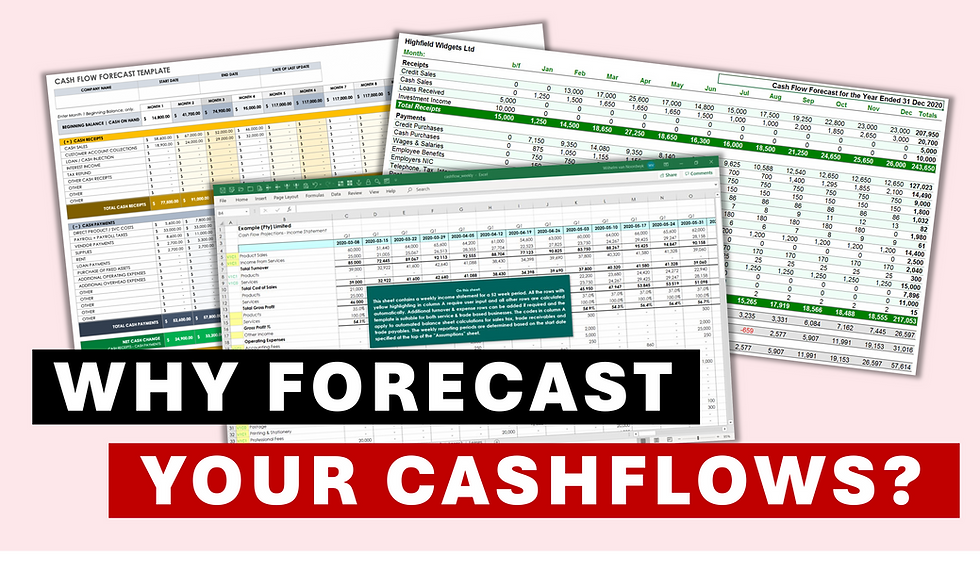
True or false: only distressed businesses forecast their cash flows.
False. And it's one of the more persistent misconceptions I come across.
The reality is that businesses at every stage of financial health forecast their cash flows. What changes is what they're trying to learn from it.
Healthy businesses: making the most of excess cash
When a business is in good financial health, cash flow forecasting isn't about survival. It's about strategy.
The forecast becomes a planning tool for what to do with excess cash. Can we pay a dividend? What's the cash flow impact of that CapEx investment we've been debating? If we refinance, how does that change our liquidity position over the next 12 to 24 months?
CapEx decisions are particularly tricky from a cash management perspective because the spending doesn't arrive in neat, predictable increments. It tends to hit in lumps, which can temporarily drag on liquidity even for an otherwise healthy business. A solid cash flow forecast factors in payment schedules, delivery timelines, and installation costs, not just the headline investment figure.
For healthy businesses, cashflow forecasting is typically part of medium to long-term financial planning. Think 12 months or more, aligned to the budget cycle. The goal is to make sure that future growth plans are actually supported by the cash flows the business expects to generate, and to make informed decisions about whether to invest, return cash to shareholders, or both.
It's not glamorous. But it's how well-run businesses stay well-run.
Stressed businesses: getting ahead of the risks
A business under financial stress isn't necessarily in crisis. But it is feeling the pressure, and that changes what it needs from a forecast.
The focus shifts from opportunity to risk management. What does our liquidity look like over the next 13 weeks? Where are the pinch points? Are we going to breach any of our debt covenants?
Covenant monitoring becomes particularly important here. Lenders set financial covenants as guardrails, and breaching them can trigger some consequences the business really doesn't want. Good liquidity management at this stage means using the 13-week cash flow forecast to monitor headroom against those covenants, flagging potential issues four to six weeks before a breach becomes likely. That's the difference between having time to act and finding out too late to do anything about it.
The forecast also becomes a key support tool for any financing or refinancing conversations with lenders. If you're going back to your bank asking for more runway, the first thing they'll want to see is a credible cash flow forecast showing your ability to service the debt. A well-built forecast doesn't just answer their questions, it builds confidence that you've got a handle on the situation.
One thing I think gets underappreciated in a stressed scenario is what cash flow forecasting does for internal culture. If you build your 13 week cash flow with the assumption that all invoices go out on time and all cash comes in on schedule, and then stress test it for delays, you can show very clearly what a 30-day collections lag actually costs the business in cash terms. That makes the conversation about timely invoicing and collections far more concrete. It's not "please invoice faster." It's "here's what happens to our cash position if you don't."
Distressed businesses: managing a crisis
In a genuine distress scenario, the 13-week cash flow forecast stops being a planning tool and becomes a crisis management tool.
The first job it does is stakeholder communication. Lenders, equity holders, and other creditors need to understand the financial outlook clearly and credibly. A well-presented 13WCF is often what distinguishes a business that can negotiate a restructuring from one that loses the confidence of its lenders entirely. It builds trust at a moment when trust is in very short supply.
In a restructuring process, the forecast helps lenders and equity holders understand not just what the outlook looks like, but what it means for them specifically. How much are they likely to recover? What actions does the outlook suggest they should take? Without a solid forecast, those conversations are guesswork. And nobody commits to a restructuring based on guesswork.
Operationally, a distressed business can't afford to pay everyone. That's the reality. The cash flow forecast becomes the tool for deciding who gets paid and when. The goal is to prioritise the payments that keep the business trading (the suppliers and employees whose non-payment would grind operations to a halt) while managing other creditors more carefully, buying time where it can be bought.
This is where the direct method of cash flow forecasting really earns its keep. You're not looking at high-level working capital movements. You're looking at specific payments, specific inflows, specific timing. Every line item matters when cash is this tight.
The real reason why companies forecast cash flow
Whether a business is healthy, stressed, or distressed, the underlying reason why companies forecast cash flow is the same: they want to know what's coming before it arrives.
The financial health of the business changes what they're looking for in the forecast, and how urgently they need it. But the principle is identical. Visibility over future cash position lets you make better decisions, whether that's a CapEx investment, a lender negotiation, or a payment prioritisation call in a crisis.
At 13WEEKS, I've worked across all three of these scenarios. The businesses that navigate each one best share one thing in common: they didn't wait until they were under pressure to build the forecasting discipline.
The right time to build proper visibility over your cash is before you need it.
Grab a free 13-week cash flow forecast template to get started.
I've helped businesses in all three of these situations get proper visibility over their cash position, often within a matter of weeks. If this resonates with where you are right now, let's have a conversation. I'd want to understand your specific situation before saying anything useful, but if it seems like a fit, we can move quickly.
Comments